Robin Robertson
Acclaimed Scots Poet
Forward Prize-winner
Man Booker Prize Finalist
Readings &
Lecture Topics
- An Evening with Robin Robertson
Biography
“The genius of this Scots poet is for finding the sensually charged moment—in a raked northern seascape, in a sexual or gustatory encounter—and depicting it in language that is simultaneously spare and ample, and reminiscent of early Heaney or Hughes.” —New Yorker
“The visceral language of a Robin Robertson poem has a way of feeling simultaneously luxurious and spartan. To put it bluntly, he writes lines that you want to read again and again.” —NY Times Book Review
“Robin Robertson is instantly recognizable as a poet of vivid authority, commanding a surprised, accurate language of his own. The evocative truth and the crystalline ring of his words, line by line, make a kind of hope in themselves.” —W.S. Merwin
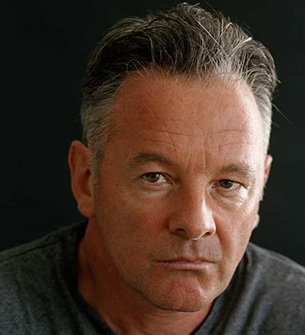
Poet and translator Robin Robertson is from the Northeast coast of Scotland and now lives in London. The Poetry Archive calls him “a poet of austere and meticulous diction, tempered by a sensuous music.”
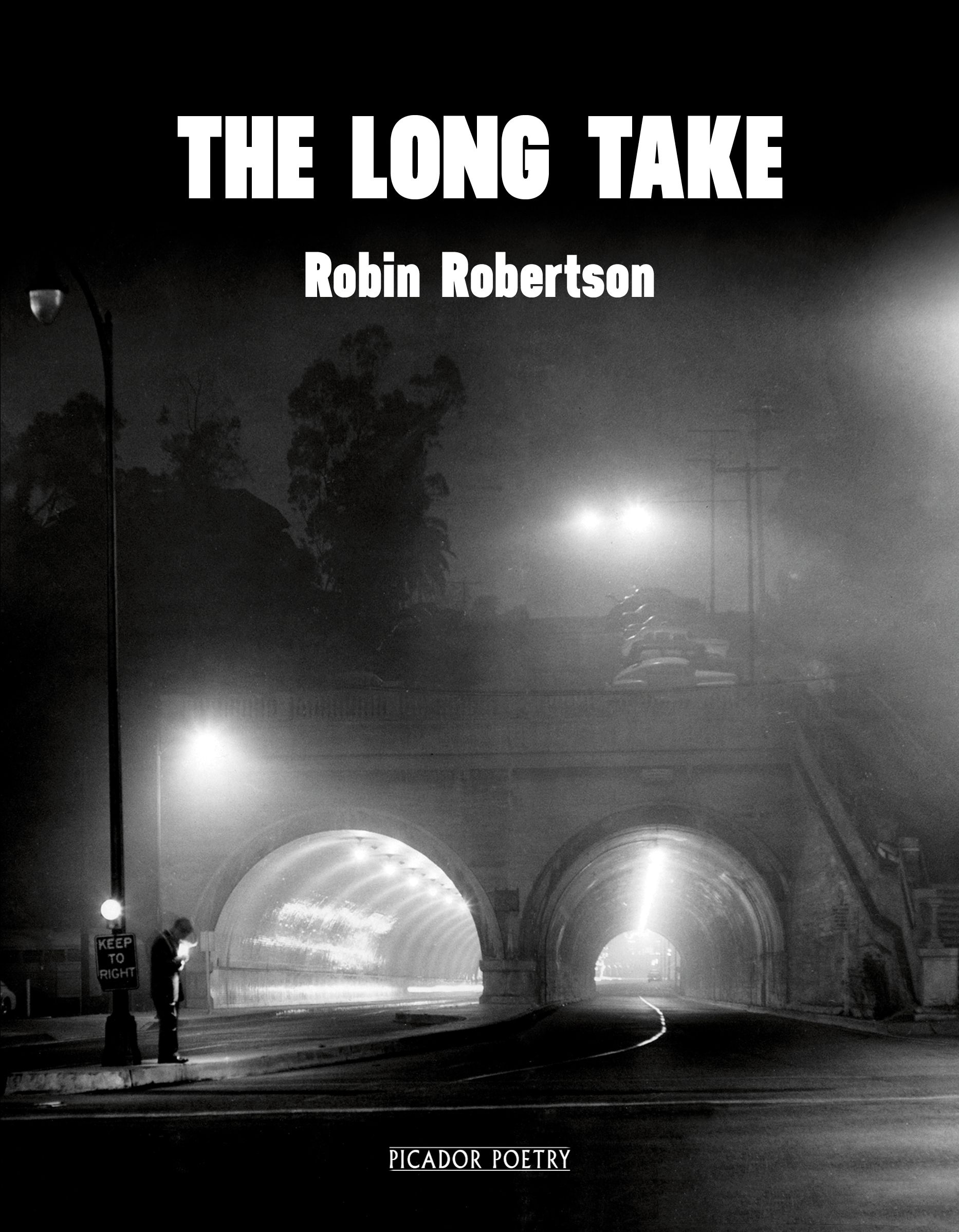
Robertson’s most recent novel, The Long Take (UK Picador 2018 & Knopf 2019), mixes verse, prose, and photographs to follow the story of a World War II veteran across the United States in the golden era of Hollywood. The Long Take won the fourth annual Roehampton Poetry Prize and is the first book of poetry/prose to be short-listed for a Man Booker Fiction prize. One of the judges, the feminist critic and writer Jacqueline Rose, described it as “a genre-defying novel that offers a wholly unique literary voice and form.” The Man Booker Judges comment elucidates: “The Long Take is like a film noir on the page. A book about a man and a city in shock, it’s an extraordinary evocation of the debris and the ongoing destruction of war even in times of peace. In taking a scenario we think we know from the movies but offering a completely different perspective, Robin Robertson shows the flexibility a poet can bring to form and style.” In the extended narrative poem, we follow Walker, a young Canadian recently demobilized after war and his active service in the Normandy landings and subsequent European operations. Suffering from post-traumatic stress disorder, and unable to face a return to his family home in rural Nova Scotia, he goes in search of freedom, change, anonymity and repair, moving through post-war American cities of New York, Los Angles and San Francisco. Renowned author Val McDermid praised its characters, language, and the insight it gave into the world. She said, “I’m not sure what else a novel is meant to do.”
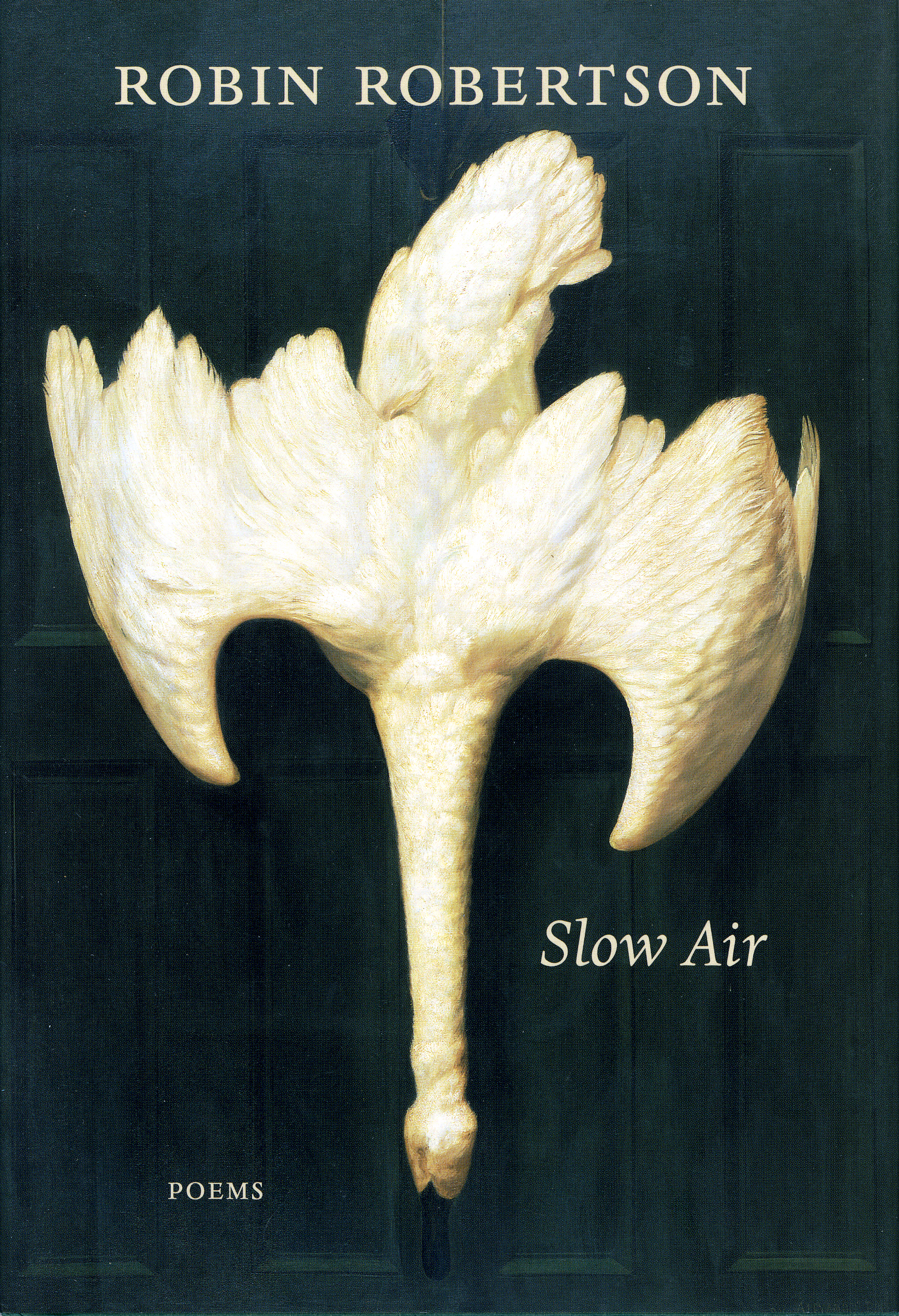
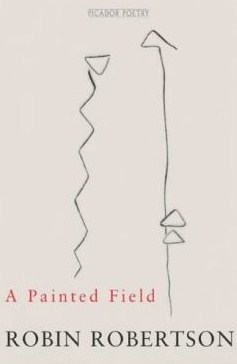
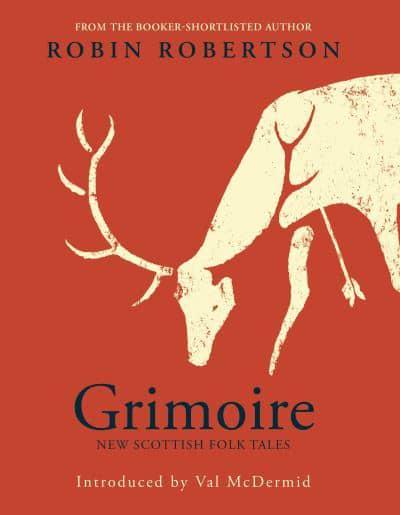
His first book, A Painted Field (Harcourt) won a number of awards in the UK, including the 1997 Forward Prize for Best First Collection and the Saltire First Book of the Year Award. His other books include Sailing the Forest, a collection of his selected poems published simultaneously by Picador in the UK and Farrar Straus and Giroux in the States. His second book, Slow Air, was published in 2002. His third collection, Swithering (Harcourt, 2006), won the 2006 Forward Prize and the Scottish Arts Council Poetry Award. This was followed by The Wrecking Light, (UK: Picador, 2010; USA: Houghton Mifflin Harcourt, 2011) and, in 2013, Picador UK published his fifth collection Hill of Doors. The same year, Hanser Verlag brought out a German selected, Am Robbenkap. He is also the author of Grimoire, a book of curses and visions, gifts both desired and unwelcome, characters on the cusp of their transformation, which was longlisted for the Highland Book Prize in 2020.
Shortlisted twice for the Costa Poetry Award and three times for the T.S. Eliot Prize, Robertson is the first poet to have won the other major British poetry award, the Forward Prize, in all three categories: Best Single Poem in 2009 (‘At Roane Head’), Best First Collection (A Painted Field, 1997) and Best Collection (Swithering, 2006). A Fellow of the Royal Society of Literature, his poetry appears regularly in the London Review of Books and the New York Review of Books. In 2004 he received the E.M. Forster Award from the American Academy of Arts and Letters, in 2012 the Cholmondeley Award from the Society of Authors, and in 2013 the Petrarch Prize.
Robertson is also a translator. He published The Deleted World, a selection of new versions of the Nobel Prize-winning Swedish poet Tomas Tranströmer’s poems, in 2006. In 2008 he released a bold translation of Euripides’s classic work, Medea (Free Press), about which Kevin Powers wrote, “With his new translation of Medea, Robin Robertson uses his extraordinary gifts as a poet to match the depth and complexity of the play with an absolute clarity of expression. This is, for me, the essential Medea in English.” His translation of the Bacchae, published in the UK by Vintage, was also released by Ecco in the Fall of 2014. Robertson also compiled and edited Mortification: Writers’ Stories of the Public Shame (Fourth Estate, 2003).
Short Bio
“Robertson’s genius for exact and gorgeous imagery, his dazzling metaphorical gift, and the knottiness of his thinking, which runs through the syntax like a bead of Metaphysical quicksilver. Few poets at work now have his unerring control of the line. The poems teem with images and metaphors that give the chime of a struck glass.” —John Banville, New York Review of Books
Robin Robertson is from the north-east coast of Scotland. A Fellow of the Royal Society of Literature, he has published six books of poetry and received a number of accolades, including the Petrarca-Preis, the E.M. Forster Award from the American Academy of Arts and Letters, and all three Forward Prizes. His selected poems, Sailing the Forest, came out in 2014. The Long Take (2018) was the first poem to be shortlisted for the Booker Prize, and it won the Walter Scott Prize for Historical Fiction, the Goldsmiths Prize for innovative fiction and the Roehampton Poetry Prize.
Visit Author WebsiteVideos
Publications
Grimoire
Stories, 2020
Like some lost chapters from the Celtic folk tradition, Grimoire tells stories of ordinary people caught up, suddenly, in the extraordinary: tales of violence, madness and retribution, of second sight, witches, ghosts, selkies, changelings and doubles, all bound within a larger mythology, narrated by a doomed shape-changer – a man, beast or god.
A grimoire is a manual for invoking spirits. Here, Robin Robertson and his brother Tim Robertson – whose accompanying images are as unforgettable as cave-paintings – raise strange new forms which speak not only of the potency of our myths and superstitions, but how they were used to balance and explain the world and its predicaments.
From one of our most powerful lyric poets, this is a book of curses and visions, gifts both desired and unwelcome, characters on the cusp of their transformation – whether women seeking revenge or saving their broken children, or men trying to save themselves. Haunting and elemental, Grimoire is full of the same charged beauty as the Scottish landscape – a beauty that can switch, with a mere change in the weather, to hostility and terror.
The Long Take
Poetry/Fiction, 2018
“An inter-genre tour de force, The Long Take is a restless reimagining of conventional poetics. With syncopated rhythms, staccato dialogue and jump-scenes, the book weaves dizzying, jazz-like meditations on PTSD, masculinity, betrayal and salvation by embodying, in sound, scent and sixth-sense, one of America’s most hopeful and devastating decades. The result is a ravishing achievement.” –Ocean Vuong
Walker is a D-Day veteran with post-traumatic stress disorder; he can’t return home to rural Nova Scotia, and looks instead to the city for freedom, anonymity and repair. As he moves from New York to Los Angeles and San Francisco we witness a crucial period of fracture in American history, one that also allowed film noir to flourish. The Dream had gone sour but – as those dark, classic movies made clear – the country needed outsiders to study and dramatise its new anxieties. While Walker tries to piece his life together, America is beginning to come apart: deeply paranoid, doubting its own certainties, riven by social and racial division, spiralling corruption and the collapse of the inner cities. The Long Take is about a good man, brutalised by war, haunted by violence and apparently doomed to return to it – yet resolved to find kindness again, in the world and in himself. —Man Booker Prize
Sailing the Forest
Poetry, 2014
“Robin Robertson’s bracing book offers a host of pleasures: rich and briny atmospheres, the burr and bristle of a fine ear, an eye restless for exact and searing detail. But the greatest of these is watching a writer come into his own, in poems increasingly compelling and large in their embrace, their dark and lustrous landscapes fully inhabited, fully haunted.” —Mark Doty
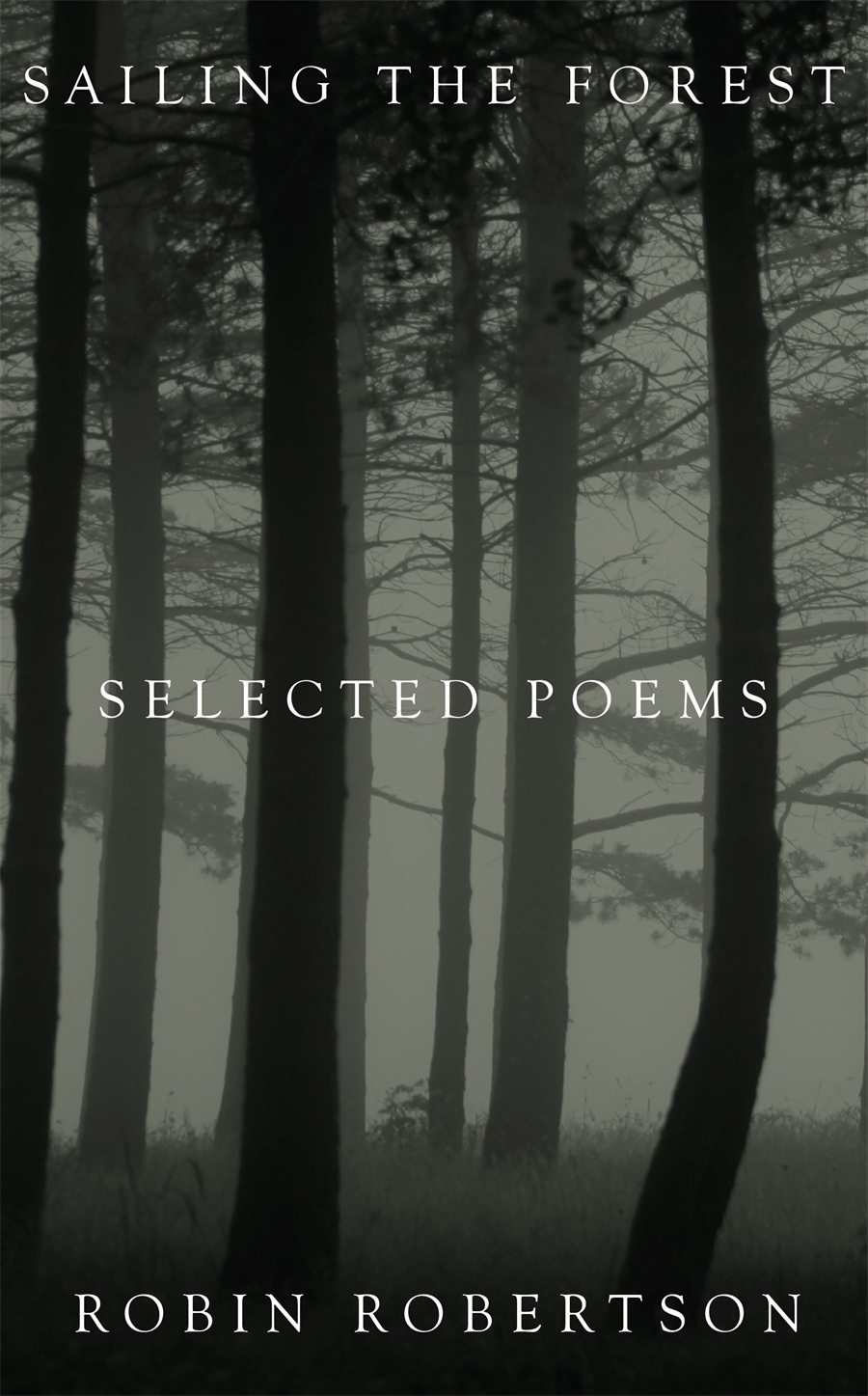
Sailing the Forest selects from the finest work of one of the most essential voices in contemporary poetry. Robin Robertson’s verse is at once haunted and haunting, beautiful and brutal, ancient and immediate, and capable of tricking ghosts from the most apparently innocuous and familiar shadows. His unique, mythically charged world is a place of forked storms, where “Rain…is silence turned up high” and we can see “the hay marry the fire / and the fire walk.” Through five remarkable collections, Robertson has captured the illusory and intangible in language of sensuous physicality. Sailing the Forest is the definitive introduction to a poet at the very height of his talents.
BACCHAE
Translation, 2014
“Robin Robertson is the great Euripides translator of our time. The clarity and power of his Medea is unmatched, and his Bacchae is just as direct, unhindered and fluid, perfect for revealing such madness.” —David Vann
A new god has come to Thebes, Dionysus, god of wine and ecstasy, and the women are streaming out of the city to worship him on the mountain, drinking and dancing in wild Bacchic frenzy. The king, Pentheus, is furious, denouncing this so-called ‘god’ as a charlatan, but no mortal can deny a god and no man can ever stand against Dionysus. How the god exacts his terrible revenge, drawing Pentheus to his own destruction, is as devastating now as it was in the fifth century BC. This stunning translation, by award-winning poet Robin Robertson, reinvigorates Euripides’ masterpiece for contemporary readers, bringing the ancient verse to fervid, brutal life.
Hill of Doors
Poetry, 2013
“Robertson is a superstar of Scottish poetry.” —Guardian
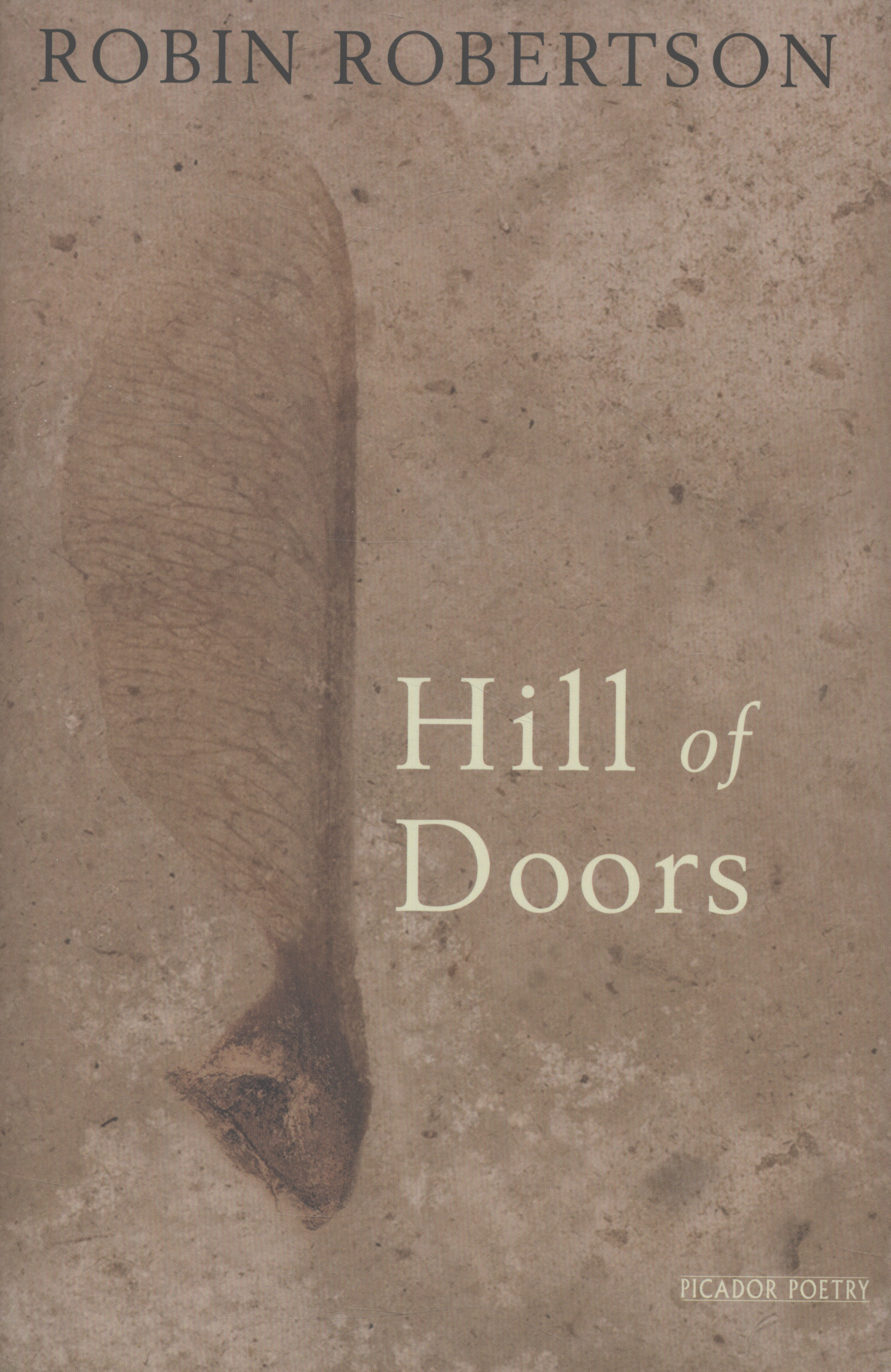
Charged with strangeness and beauty, Hill of Doors is a haunted and haunting book, where each successive poem seems a shape conjured from the shadows, and where the uncanny is made physically present. The collection sees the return of some familiar members of the Robertson company, including Strindberg—“heading, as usual, towards calamity—and the shape-shifter, Dionysus. Four loose retellings of stories of the Greek god form pillars for the book, alongside four short Ovid versions. Threaded through these are a series of pieces about the poet’s childhood on the Northeast coast, his fascination with the sea and the islands of Scotland. However, the reader will also discover a distinct new note in Robertson’s austere but ravishing poetry: towards the possibility of contentment—“a house, a door, a key”—finding, at last, a “happiness of the hand and heart.” Magisterial in its command and range, indelibly moving and memorable in its speech, Hill of Doors is Robin Robertson’s most powerful book to date.
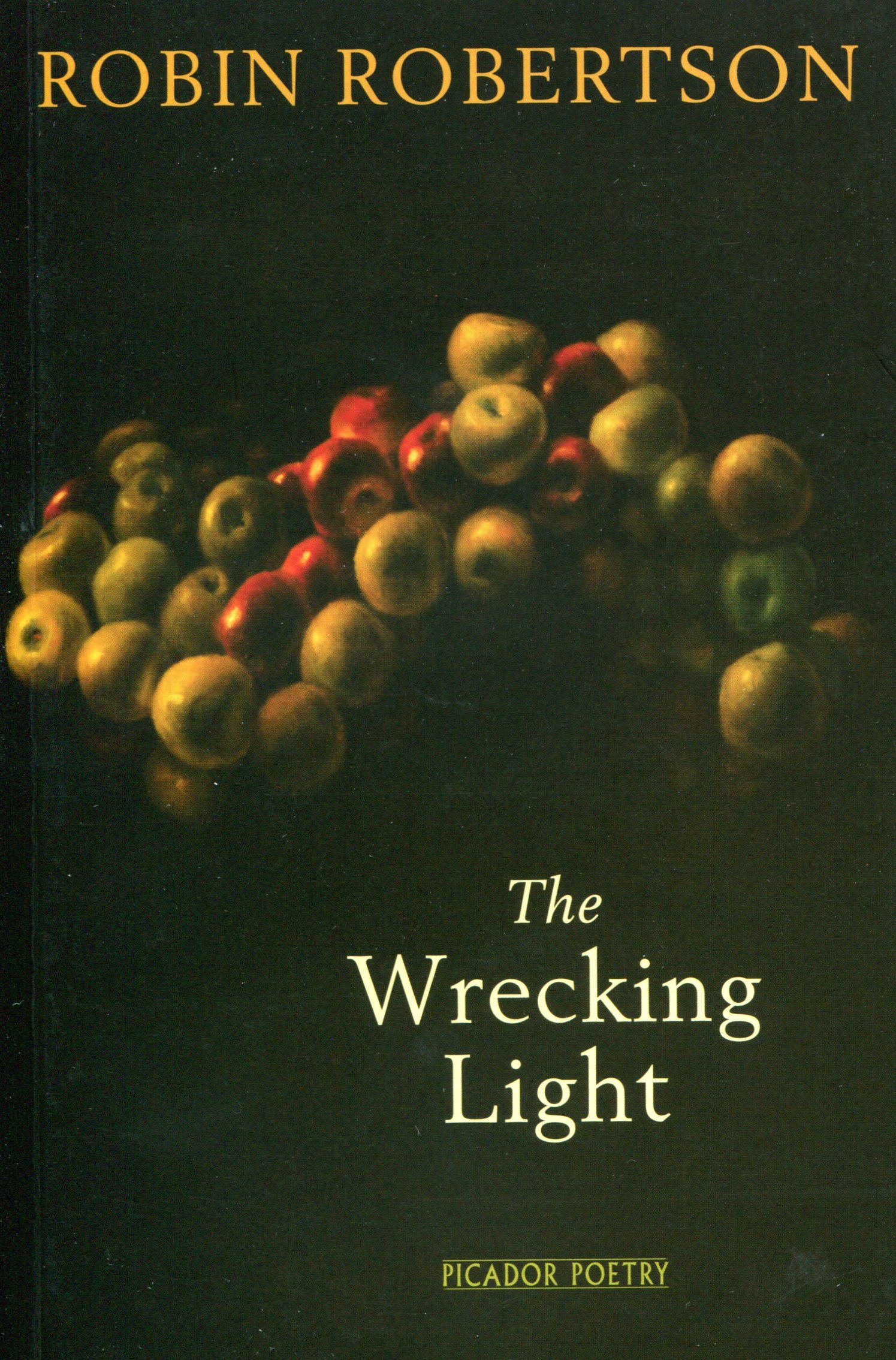
The Wrecking Light
Poetry, 2011
“There’s an oneiric charge and intensity to many of these poems that builds to a fabular clarity of thought, which is at once precise in its particularity and placeless. Whether in his extraordinarily fresh renderings of Ovid or his own imaginings, Robertson’s lines have the luminosity of myth. The Wrecking Light is a work of extraordinary visionary power, its music bleak and beautiful, spare and unsparing. If there were justice in the world, it would win every prize going.” —Guardian
Robin Robertson’s fourth collection is, if anything, an even more moving, bleakly lyrical, and at times shocking book than Swithering, winner of the Forward Prize. Alongside deft translations from Neruda and Montale, and dynamic-at times horrific-retellings of stories from Ovid, the poems in The Wrecking Light pitch the power and wonder of nature against the frailty and failure of the human, their utter seriousness leavened by a wry, dry, and disarming humour. Ghosts sift through these poems; certainties become volatile, and the simplest situations thicken with strangeness and threat. All of these poems are haunted by the presence and pressure of the primitive world against our own, and are written with the kind of dream-like intensity of description that has become Robertson’s trademark. The Wrecking Light is a book of considerable grandeur and sweep from one of the most powerful poets at work today.
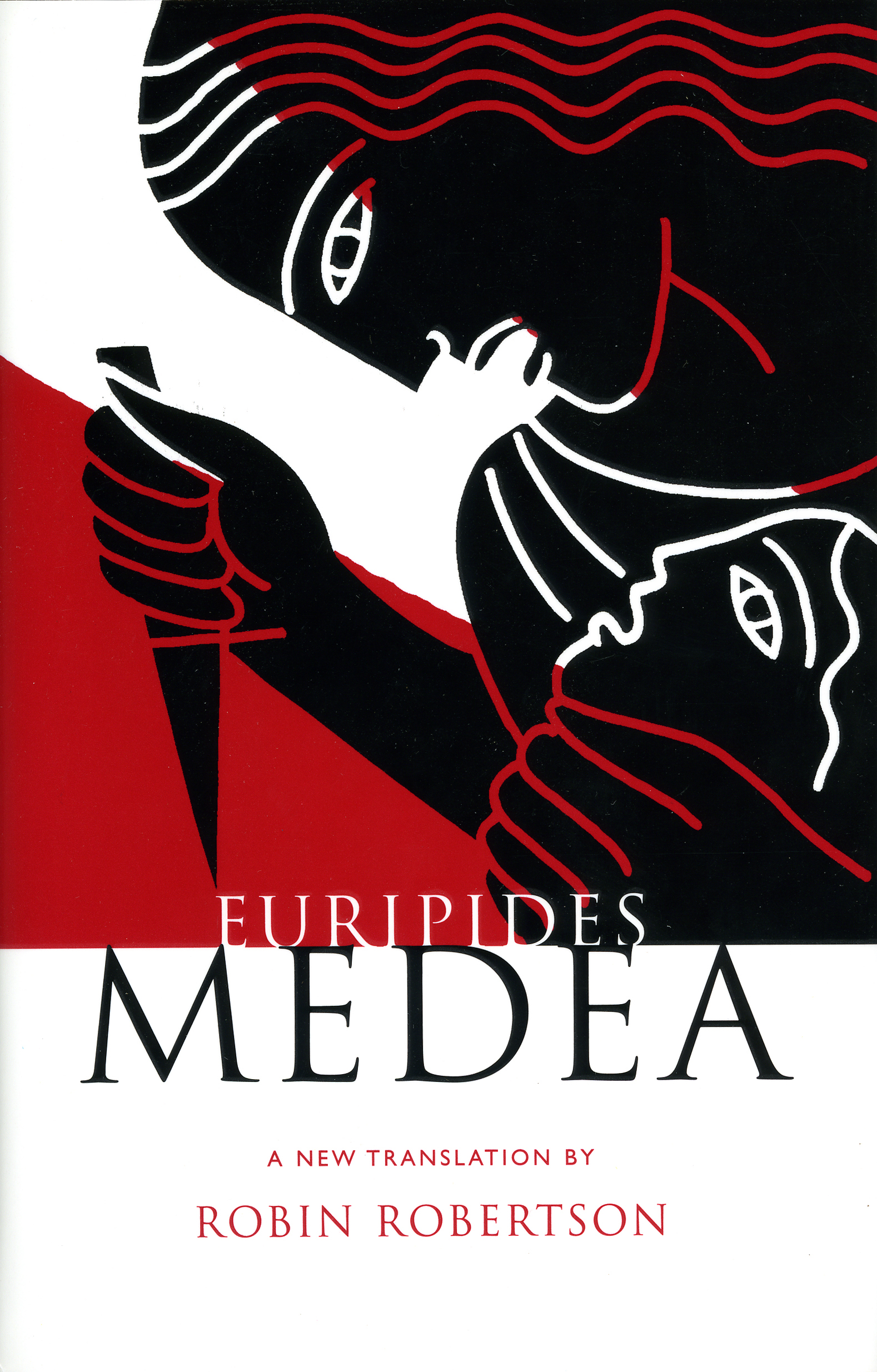
MEDEA
Translation, 2008
“The purpose of translation is to set a play free. This is just what Robin Robertson does. In his lucid, free-running verse, Medea’s power is released into the world, fresh and appalling, in words that seem spoken for the first time.” —Anne Enright
Medea has been betrayed. Her husband Jason has left her for a younger woman. He has forgotten all the promises he made and is even prepared to abandon their two sons. But Medea is not a woman to accept such disrespect passively. Strong-willed and fiercely intelligent, she turns her formidable energies to working out the greatest, and most horrifying, revenge possible….Euripides’ devastating tragedy is shockingly modern in the sharp psychological exploration of the characters and the gripping interactions between them. Award-winning poet, Robin Robertson, has captured both the pace and vitality of the drama and the power and beauty of the poetry and has reinvigorated this masterpiece for the twenty-first century.
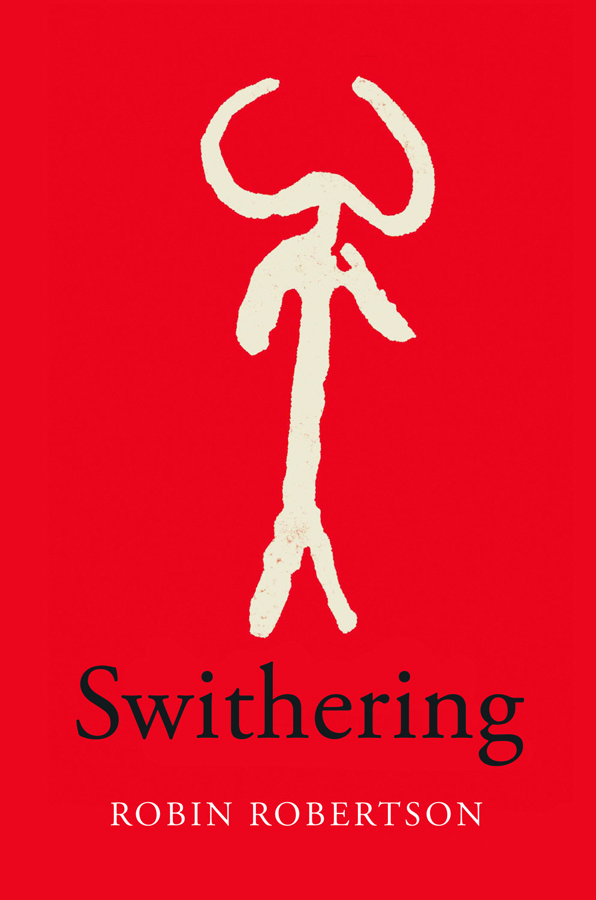
Swithering
Poetry, 2006
“Compellingly terse…Robertson portrays dramatic, threatening landscapes and seascapes from Scotland, Ireland, and the north of England in gritty, tactile verse a bit like the young Heaney’s…Wringing grave warnings from confident descriptions, Robertson’s poems…render the world with force enough to make it ours.” —Stephen Burt, New York Times
To “swither” means to suffer indecision or doubt, but there is no faltering in these poems; any uncertainty is not in the line or the sound or the image, but only in the themes of flux and change and transformation that thread through this powerful third collection. Robin Robertson has written a book of remarkable cohesion and range that calls on his knowledge of folklore and myth to fuse the old ways with the new. From raw, exposed poems about the end of childhood to erotically charged lyrics about the ends of desire, from a brilliant re-telling of the metamorphosis and death of Actaeon to the final freeing of the waters in “Holding Proteus,” these are close examinations of nature—of the bright epiphanies of passion and loss. At times somber, at times exultant, Robertson’s poems are always firmly rooted in the world we see, the life we experience: original, precise, and startlingly clear.
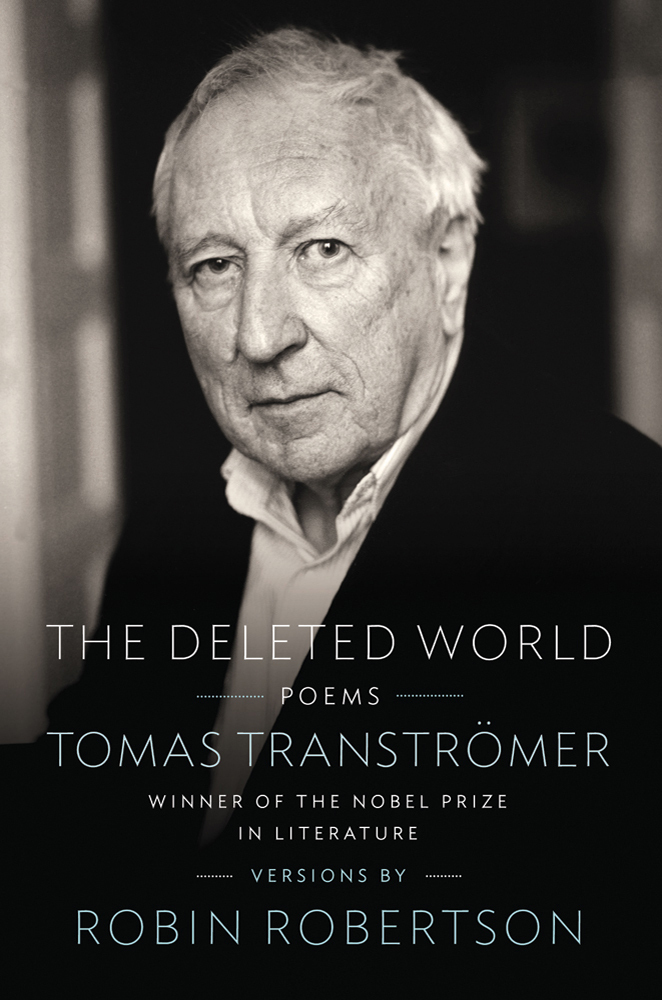
THE DELETED WORLD: New Versions of Tranströmer
Translation, 2006
“He has captured the tone of the oeuvre in the poem, and the work, as a whole, shows his meticulous use of language which conveys the poet’s thought subtly and faultlessly…This wonderful book has much to teach other translators in its immense concentration and daring accuracy.” —Anne Born, Swedish Book Review
Tomas Tranströmer—the recipient of the 2011 Nobel Prize in Literature—can be clearly recognized not just as Sweden’s most important poet, but as a writer of international stature whose work speaks to us now with undiminished clarity and resonance. Long celebrated as a master of the arresting, suggestive image, Tranströmer is a poet of the liminal: drawn again and again to thresholds of light and of water, the boundaries between man and nature, wakefulness, and dream. A deeply spiritual but secular writer, his skepticism about humanity is continually challenged by the implacable renewing power of the natural world. His poems are epiphanies rooted in experience: spare, luminous meditations that his extraordinary images split open—exposing something sudden, mysterious, and unforgettable. As Stephanie Burt said of these free English versions, “The Deleted World is a fine introduction to a poet whose work will endure, and who sounds good—as so many poets cannot—in a language not his own.”
Articles & Audio
Read What’s In Print
• As Noir as It Gets — Los Angeles Review of Books
• Scottish poet tells the story of a Canadian vet in post-WW II America — in verse — CBC
• Robin Robertson: ‘Writing poetry has very little to do with the intellect’ — The Guardian
• Poetry need not be a call to action, but The Long Take is — Washington Post
• Robin Robertson: The poetry world is polarised. I’m in the middle, vaguely appalled – The Guardian
• Slice of Life Review of The Long Take – London Review of Books
• Review: The Long Take by Robin Robertson – The Guardian
• Review of Sailing the Forest — New York Times
• Interview with Robin Robertson — The Guardian
• Interview with Robin Robertson — Open Letters Monthly
• Review of The Wrecking Light — The Guardian
• Review of The Wrecking Light — New York Review of Books
• Review of Swithering — Bookslut
• Profile on Robertson’s Poem “Finding the Keys” — The Guardian
Listen to Audio
• Robin Robertson Reads “What the Horses See at Night” — Poetry Archive
Selected Writings
THE LONG TAKE
And there it was: the swell
and glitter of it like a standing wave –
the fabled, smoking ruin, the new towers rising
through the blue,
the ranked array of ivory and gold, the glint,
the glamour of buried light
as the world turned round it
very slowly
this autumn morning, all amazed.
And it stayed there, watching,
as they made toward it,
the truck-driver and the young man,
under pylons, wires, utility poles,
past warehouses, container parks,
deserted lots, between the long
oily marshes, landfill sites and swamps,
before slipping down
under the Hudson and coming up
on the other side
to find a black wetness
of streets trashed and empty
and the city gone.
– from The Long Take
ABANDON
That moment, when the sun ignites the valley and picks out
every bud that’s greened that afternoon; when birds
spill from the trees like shaken sheets; that sudden loosening
into beauty; the want in her eyes, her eyes’ fleet blue;
the medals of light on water; the way the water intrigued
about her feet, the ocean walking her out into its depth,
sea lighting the length of her from the narrow waist
to the weight of the breasts; the way she lifted her eyes to me
and handed me back, simplified; that moment
at the end, knowing the one I had abandoned was myself,
edging with the sun around the bay’s scoop of rocks,
rolling the last gold round the glass; that shelving love
as the sun was lost to us and the sky bruised, and the
stones grew cold as the shells on the beach at Naxos.
—from The Wrecking Light
WEDDING THE LOCKSMITH’S DAUGHTER
The slow-grained slide to embed the blade
of the key is a sheathing,
a gliding on graphite, pushing inside
to find the ribs of the lock.
Sunk home, the true key slots to its matrix;
geared, tight-fitting, they turn
together, shooting the spring-lock,
throwing the bolt. Dactyls, iambics—
the clinch of words—the hidden couplings
in the cased machine. A chime of sound
on sound: the way the sung note snibs on meaning
and holds. The lines engage and marry now,
their bells are keeping time;
the church doors close and open underground.
—from Slow Air
ARTICHOKE
The nubbed leaves
come away
in a tease of green, thinning
down to the membrane:
the quick, purpled,
beginnings of the male.
Then the slow hairs of the heart:
the choke that guards its trophy,
its vegetable goblet.
The meat of it lies, displayed,
up-ended, al dente,
the stub-root aching in its oil.
—from A Painted Field